
Our Team
Wendy Barillas
Licensed Marriage and Family Therapist #133716
View ProfileExplore counseling options. Request an Appointment.
For Parents and Caregivers
Support for parents and caregivers who want to understand a child or teen, ease the strain at home, and feel more connected as a family.
01
Parenting can hold deep love and real strain side by side. You may be worn down by battles over routines, worried about a child who has pulled away, unsure how to respond to a teen's moods, or stretched thin between work, family and your own needs. Reaching out for support is not a sign that you are failing your child. It can be one way of caring for the whole family, including yourself.
Parenting support gives you a place to talk honestly about what is happening at home without being judged. A therapist can help you slow down a difficult moment, notice what it stirs up in you, and think through responses that fit your child, your family and your values. The goal is not to become a perfect parent. It is to find steadier footing in the moments that feel hardest.
By parent, we mean anyone raising or caring for a child or teen, including stepparents, grandparents and other caregivers. HOPE welcomes families of many shapes, including blended and LGBTQ+ families. For separated parents raising a child across two homes, Wendy Barillas's experience also includes co-parenting and reunification services.
02
Children and teens often show what they feel before they can explain it. A meltdown at bedtime, a slammed door, sudden quiet or new trouble at school may carry worry, grief, frustration or a need for closeness. Counseling can help you get curious about what sits underneath, so the behavior becomes something to understand and not only something to stop.
Your own reactions belong in the conversation too. Parenting can stir up memories of how you were raised, along with old hurts and patterns you hoped not to repeat. Noticing those moments with compassion rather than blame can make it easier to respond the way you intend. Wendy's attachment-based work starts from the idea that early relationships shape how each of us connects, and that holds for parents as much as for children.
Megan brings a somatic perspective, meaning she pays attention to how stress and feelings show up in the body. For a parent, that might mean noticing a tight chest or a clenched jaw in the middle of a conflict and finding a pause before responding. Eva integrates parts-informed, emotion-focused and attachment-based work, which can be useful when you feel pulled between reactions, such as wanting to comfort your child and wanting to hold a firm limit.
03
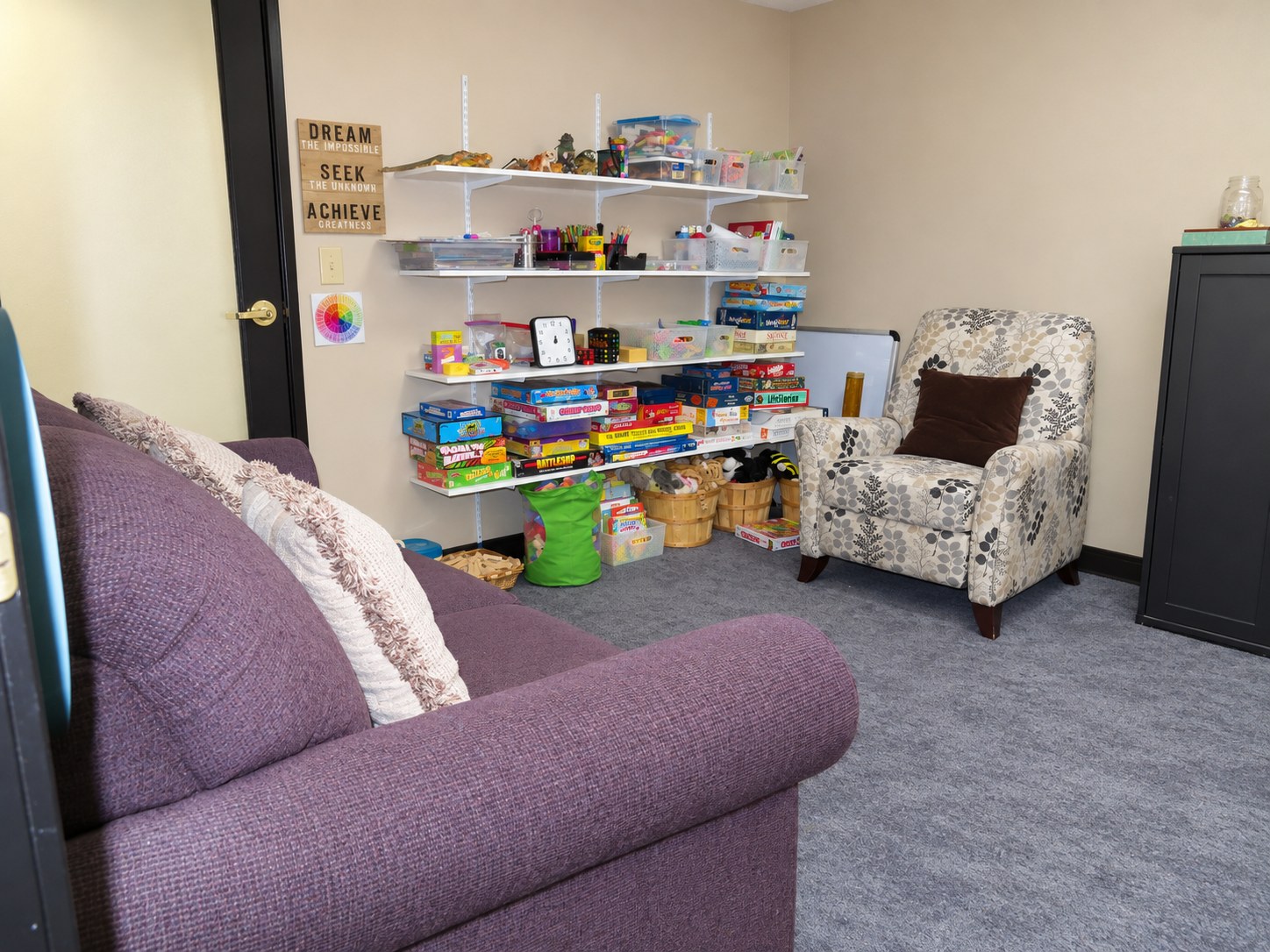
Support can take different shapes. You might meet on your own, come with a partner or co-parent, or bring your child into family sessions, and HOPE's two children's rooms, one with a play kitchen and one with shelves of toys and games, give younger children room to play. Your therapist can talk with you about how time with parents, time with your child and time together might fit as the work unfolds.
Wendy Barillas, Licensed Marriage and Family Therapist #133716, works with children and families and is trained in play therapy and Parent-Child Interaction Therapy. Megan Sullivan, a Marriage and Family Therapist Trainee supervised by Wendy, is a parent and taught for twenty-five years before becoming a therapist, roles she describes as shaping her understanding of development, resilience and the need to be seen and supported. Eva Di Giorgio, Registered Associate Marriage and Family Therapist #144286, supervised by a Licensed Marriage and Family Therapist, works with children, adolescents, adults and families.
HOPE's therapists also offer education-focused trainings for parents, as well as for individuals and couples, aimed at understanding relational patterns, building self-awareness and gaining tools for connection. No training dates are listed on this page. If a parent training interests you, email info@hope-counselingcenter.org or call 916-757-3030 and ask whether one is planned.
04
Counseling at HOPE is collaborative and shaped around the person, couple, or family in the room. We do not begin with a preset definition of success. Instead, your therapist makes space for what matters to you, helps you identify personal goals, and works with your experiences and strengths. You can talk about what feels difficult, notice patterns, and decide together where to focus.
Our therapists bring different backgrounds and approaches to this work. Some draw from attachment-based, relational, psychodynamic, parts-informed, somatic, emotion-focused, or cognitive behavioral perspectives. Trauma-informed approaches available within the practice include EMDR, Brainspotting, and Trauma-Focused CBT. Work with children and families may also include play therapy and Parent-Child Interaction Therapy. The approach used depends on the therapist, the client, and the goals you discuss together.
The relationship between client and therapist matters. Our team aims to offer a setting grounded in trust, collaboration, communication, and respect. You can ask questions, share what is or is not helpful, and move at a pace that respects where you are. Therapy can include honest conversation, attention to emotions and relationships, and practical ways of understanding what you are experiencing.
05
A first step does not require having everything figured out. You can read our therapist profiles, or call or email us and we will help you find a good starting point. If you have a therapist preference, let us know. If you do not, we can help identify a good starting point based on the concern, who will attend, the way you would like to meet, and any language preference.
HOPE offers counseling in person at our Roseville office and by secure video for clients who are located in California during the session. Wendy offers counseling in English and Spanish. A therapist will contact you within 48 hours, Monday through Friday. Before beginning, you can ask questions and learn what to expect so that the next step feels clear.
Questions
Begin Here