

Our Team
Wendy Barillas
Licensed Marriage and Family Therapist #133716
View ProfileExplore counseling options. Request an Appointment.
Coaching for Caregivers and Children
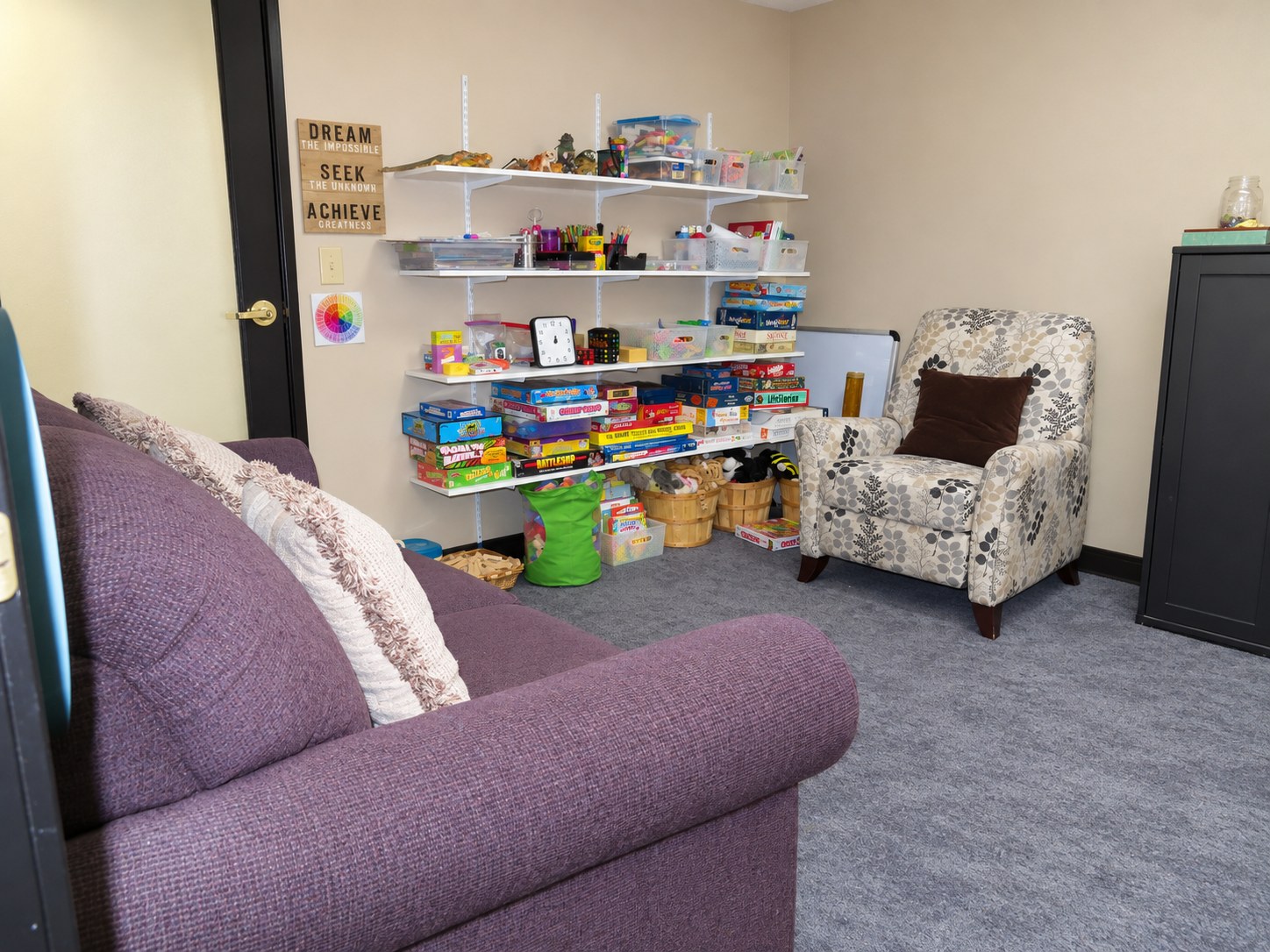
In Parent-Child Interaction Therapy, or PCIT, a therapist coaches a parent or caregiver while they play with their child, supporting a warmer bond and calmer moments together.
01
Parent-Child Interaction Therapy is built on a simple idea: the relationship between a young child and the adults who care for them is an important place for growth. Rather than the therapist working with the child alone, PCIT puts the caregiver at the center. The therapist coaches the parent or caregiver while they play with their child, offering guidance in the moment instead of only talking about it afterward.
That coaching tends to focus on two things. The first is warmth and attention: noticing and praising specific things a child does well, describing what they are doing, and following their lead in play so they feel truly seen. The second is calm, clear guidance: giving directions a young child can follow and responding consistently, so both caregiver and child know what to expect.
Because caregivers practice these skills with support, the skills belong to the family rather than staying in the therapy room. PCIT generally includes short, regular practice at home between sessions. Your therapist will explain how sessions are set up and what practice at home can look like for your family.
02
PCIT is designed for young children and the adults who care for them. A family might consider it when a child's behavior has become hard to manage, when everyday routines turn into power struggles, or when stress, change or difficult experiences have strained the relationship. It can also suit caregivers who want more tools and more confidence for hard moments.
Parents, grandparents and other caregivers can take part, and blended families, LGBTQ+ families and families of every other shape are welcome at HOPE. Whatever your family looks like, PCIT centers on the everyday relationship between a child and the grown-ups who show up for them, at meals, at bedtime and in all the ordinary moments in between.
Seeking PCIT does not mean a parent has failed. Young children push limits, and every family meets seasons when patience runs thin and familiar strategies stop working. PCIT builds on what is already good between you and your child, treating you as a central person in your child's life rather than a problem to fix.
03
At HOPE, Parent-Child Interaction Therapy is offered by Wendy Barillas, LMFT #133716, our Executive Director and Clinical Supervisor. She works with children, families, couples and individuals. Trauma and attachment are central to her focus, including work with children and families who have lived through abuse, neglect and other adverse experiences.
Wendy's training also includes play therapy, Trauma-Focused CBT and attachment-based approaches. That range means PCIT can be part of a broader conversation about what your family needs. For one family, coaching during play may be the heart of the work. For another, individual time with a child, family sessions or a different approach may fit better, and Wendy can talk through those options with you.
When you reach out, a brief note about your child and what has felt difficult is enough to begin. You can ask which formats are available for PCIT, and if a parent or caregiver would feel more comfortable speaking Spanish, let us know, since Wendy counsels in both English and Spanish.
04
No single approach defines counseling at HOPE. Our therapists work collaboratively, learn about the person and concern in front of them, and shape care around individual goals. An approach may be one part of the work, and you can ask questions or discuss another direction at any time.
The therapeutic relationship remains central. Your therapist will explain what they are inviting you to do, listen to your response, and respect your pace. You do not need to arrive knowing which method you want. Therapist profiles can help, or call or email us and we will help you find a good starting point.
HOPE offers counseling in person in Roseville and by secure video when the client is physically located in California. When you reach out, you can name an interest in a particular approach or simply describe what you would like support with.
Questions
Meet the Team
Begin Here